Rat control in Utrecht: the warning signs
The brown rat is clever and cautious and prefers to move along walls and in the dark. You will often hear or smell rats before you see them.
- dark, spindle-shaped droppings of one to two centimetres
- dark, greasy smear marks along walls and beams
- burrows under paving, sheds or the compost heap
- coarse gnaw marks on wood, plastic or pipes
- scratching under the floor or in a suspended ceiling, especially at night
Do not wait too long. Rats can spread diseases such as Weil's disease, and they gnaw through cables and pipes.
How rats get in: sewers, drains and gardens
Inside the house, rats usually come from the sewer. A pipe joint that has come loose under the floor, a cracked drainpipe or an old connection that was never capped is all it takes. The rat then appears in the crawl space, behind the kitchen units or even via the toilet bowl. A camera inspection by a drainage specialist shows exactly where the defect is.
Outdoors, rats are drawn by food. Bread for the ducks, bird seed on the ground, chicken feed and an open compost bin all give them a reason to stay. They dig in under sheds and patios and from there run along the outside wall looking for a way in.
Professional rat control with a clear method
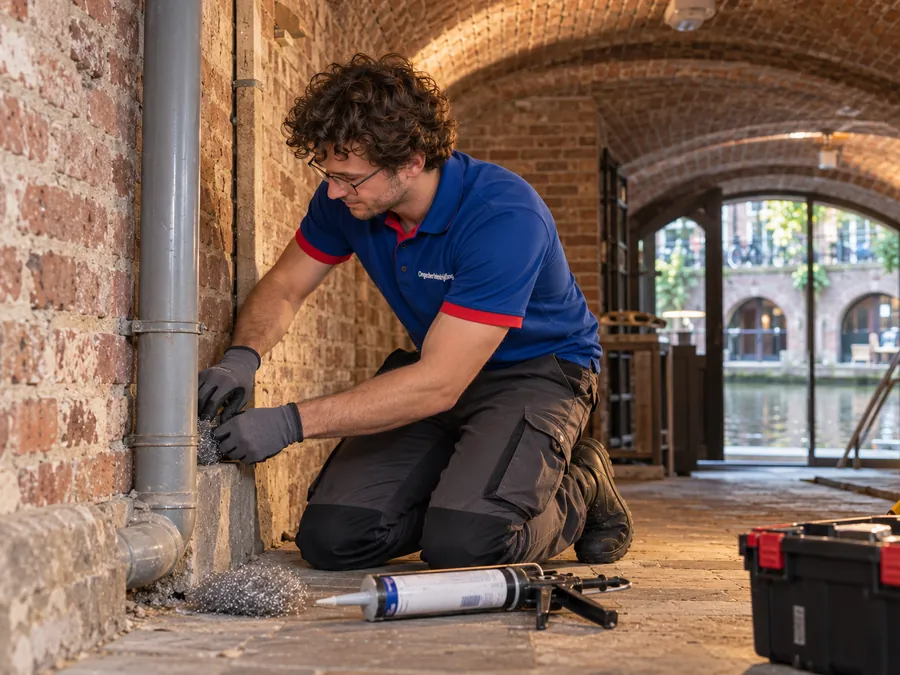
Our rat control starts at the source. During the inspection we follow runs, smear marks and burrows until we know where the rats are coming from. If they are coming up from the sewer, we advise fitting a rat valve (rattenklep) in the drain and, where needed, repairing the pipe. Holes in floors and walls are sealed with gnaw-proof material.
After that we deal with the rats already present, using traps or professional bait in locked bait boxes. Such bait may only be used by a certified pest controller. On a follow-up visit we check whether the bait is still being eaten and whether there are new signs. More about our pest control in Utrecht can be found on the main page.
What you can do about rats, and what not
Remove anything rats can eat: bird seed from the ground, food scraps from the compost bin and open rubbish bags. Keep waste in a closed container and give chickens only as much as they eat at once. Cut back plants growing against the house so rats have less cover.
Do not start using poison yourself. A rat that eats poison often dies somewhere out of reach, and the product can also end up with pets or wildlife. If what you see or hear are small rodents rather than large ones, our page on mouse control may be more useful. Rats in a park, along the quay or in the street should be reported to the gemeente Utrecht.
Stopping rats from coming back
Keeping rats out means closing off the way in and taking away their food. A rat valve on your sewer connection stops them returning through the drains. During renovation work, have any old, unused drain capped, and check the crawl space for wet patches, which can point to a leaking pipe.
For restaurants and businesses there is more to do: keep the bin store clean, do not leave containers open against the building and check deliveries for gnaw damage to boxes. Every scrap you take away is one less reason for a rat to return.